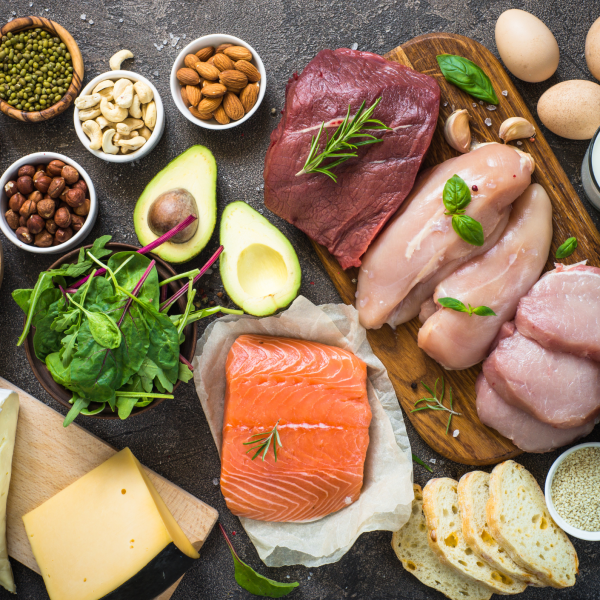

Whether your care is conservative (exercise therapy / strength training) or surgical, your recovery depends on one key factor: adequate protein intake.
Why are proteins so important?
The body doesn’t truly store amino acids the way it stores fat or sugar. The only real protein “reserve” in the body is your muscles.
And that reserve increases in only two ways:
- Sufficient protein intake
- Resistance-based strength training
It’s the combination of the two — protein + resistance — that allows you to build, preserve, and recover effectively.
Ultimately, the goal isn’t only to live longer, but to live better.
This goal is even more important in certain situations
1. Older adults: maintaining independence and preventing falls
With age, muscle tends to decline, and recovery is often slower. But less muscle = less strength = higher risk of losing balance.
Adequate protein intake, combined with appropriate strengthening, helps preserve:
- leg strength,
- stability,
- independence (stairs, walking, standing up from a chair).
For more information, read “Preventing the risk of falls among the elderly” – Dr E.
2. Women in peri-menopause / menopause: preserving lean mass
Peri-menopause often comes with hormonal changes that may promote:
- gradual muscle loss,
- reduced muscle tone,
- more difficult recovery if activity decreases.
Here too, the most effective strategy is simple: regular strengthening + sufficient protein, especially if the goal is to increase (or maintain) muscle mass.
For more information, read “Sarcopenia and peri-menopause/menopause” – Dr E.
3. Pre- and post-operative phase
Before surgery, good nutritional status supports better recovery.
After surgery, protein plays a central role and is essential for:
- healing (skin, muscles, tendons),
- tissue repair,
- strength recovery,
- returning to independence.
If appetite is reduced, the priority is to reach your protein target — even with simple solutions (protein snacks, supplements).
4. More generally: everyone
Even without surgery or a sports goal, an appropriate protein intake helps:
- recover better from rehab sessions,
- preserve muscle during periods of pain or inactivity,
- support long-term quality of life.
Key takeaway: muscle mass = strength = better quality of life, and often betterrecovery after surgery.
What is the ideal amount of protein per day?
In general, it is recommended to consume 1.2 g to 2 g of protein per kg of body weight per day, ideally spread throughout the day.
Examples:
- 60 kg → 90 to 120 g/day
- 70 kg → 105 to 140 g/day
- 80 kg → 120 to 160 g/day
Note: recommended protein intake depends on age, sex, health status, physical activity, and personal goals. These figures provide a useful benchmark, but for a specific objective, it may be relevant to consult a nutrition specialist to optimize intake and create a personalized plan.
If you have a specific medical condition (especially kidney disease) or a medical recommendation, seek advice before significantly increasing your protein intake.
Swiss Ortho Clinic, we collaborate with Vivian Seulin, nutrition therapist to offer comprehensive follow-up for our patients.
How to reach 1.2–2 g/kg/day without making life complicated
Example for 70 kg → 105–140 g/day:
- Breakfast : 20–40 g
- Lunch : 20–40 g
- Dinner : 20–40 g
- Snack : 15–30 g if needed
Key point: spread intake across the day, rather than concentrating on everything in the evening.
List of protein-rich foods
Animal sources
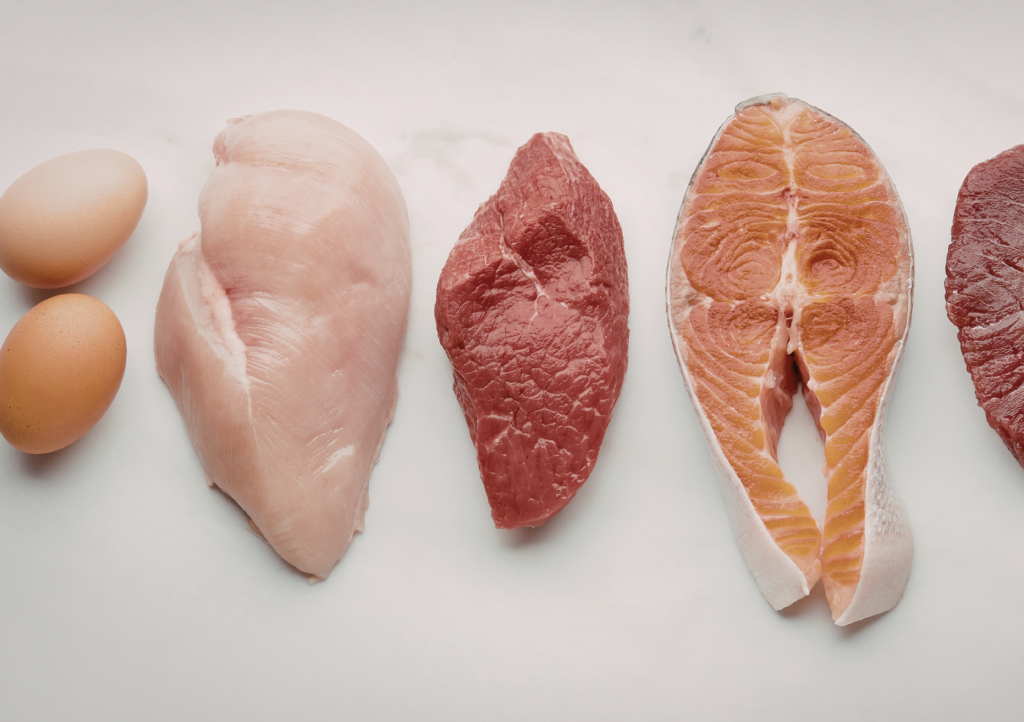
- Chicken / turkey
- Lean meats
- Fish (tuna, salmon, cod)
- Eggs
- Skyr / quark / fromage blanc
- Cottage cheese
- Milk and high-protein yogurts
Plant sources
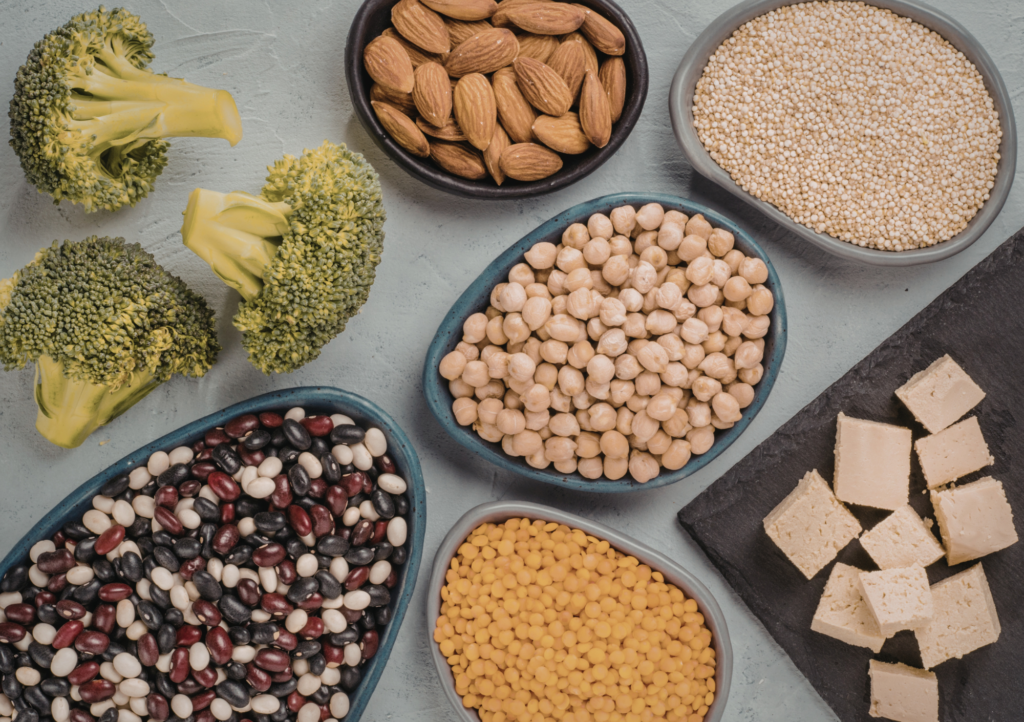
- Lentils, chickpeas, beans
- Quinoa, spelt, oats (grains)
- Tofu / tempeh
- Edamame
- Seitan
- Nuts and seeds (almonds/walnuts: useful, but higher in calories)
Simple tip: combining legumes + grains (e.g., lentils + rice) improves the amino acid balance.
What about whey protein?
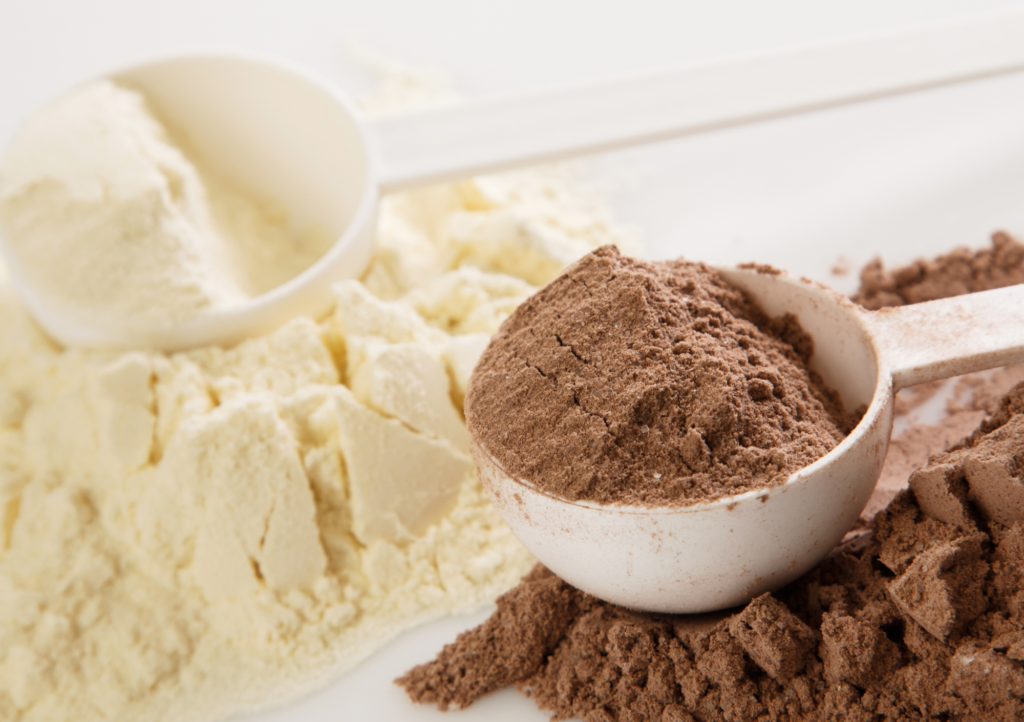
Whey (whey protein) can be a practical supplement if:
- you don’t reach your targets through food,
- you have a low appetite (often post-op),
- you want a fast option after strength training.
In general, one scoop provides 20–30 g of protein (depending on the brand). It can be taken:
- as a snack,
- after a strengthening session,
- or mixed into a smoothie / yogurt.
Important: whey does not replace a varied diet — it supplements it.
Conclusion
In orthopaedics, recovery doesn’t rely only on surgery or rehabilitation. It also depends on your “building materials.”
Protein + resistance-based strengthening = the foundation for preserving and rebuilding muscle.
Muscle mass = strength = independence = quality of life.
If you would like a personalized plan, we recommend booking an appointment with Vivian Seulin, nutrition therapist